

America’s Transportation Infrastructure Act of 2019—What It Means for the Logistics Industry

semi trucks speeding on the highway at sunset

America’s Transportation Infrastructure Act of 2019 is the largest highway legislation in history, authorizing $287 billion to maintain, repair, and modernize infrastructure for roads and bridges across the country. It is a reauthorization of the Fixing America’s Surface Transportation (FAST) Act. The U.S. Department of Transportation’s proposed bill would draw on the Highway Trust Fund and other sources over the next five years to increase federal aid by 27% from the current legislation, which expires in October 2020. The bill increases the flexibility of funding among states, prioritizes specific highway projects, improves road safety, and protects the environment.

Proposed Projects for Road and Bridge Infrastructure

John Barrasso, junior senator from Wyoming and Chairman of the Senate Committee on Environment and Public Works (EPW), introduced the bill by stating its primary objective: “America’s Transportation Infrastructure Act will grow the economy, make our roads safer, and enhance the quality of life for the American people.” One of the most significant projects in the proposal designates $125 million in funding to the Alabama Department of Transportation to build a six-lane bridge across the Mobile River channel on Interstate 10. The other primary project designates $125 million in funding to the state of Maryland to implement double-stack trains for the Howard Street Tunnel in Baltimore.

The bill is also the first of its nature to focus on a sustainable future for transportation. The legislation includes the first climate title in a highway bill, which would invest $10 billion in policies and projects with the goal of reducing emissions and enhancing resilience after natural disasters. The bill also details efforts to invest in natural gas refueling stations and electric vehicle charging stations at popular highway rest stops across the nation.

Improving Road Transportation to Benefit the Transportation Logistics Industry

The senators proposing the bill promise it will “cut Washington red tape, so road construction can get done faster, better, cheaper, and smarter.” Leaders in the logistics industry hope this will translate to greater supply chain efficiencies, with fewer obstacles and quicker deadlines.
The bill also increases funding for the Technology and Innovation Deployment Program, including $100 million for new and innovative construction technologies that will accelerate and streamline project delivery. This additional funding will help the logistics industry improve the process for road construction projects, making them more efficient and cost-effective.

The American Trucking Association (ATA) reacted positively to the bill, believing these investments will transform transportation by updating America’s road infrastructure for the 21st century. NATSO, the National Association of Truck Stop Operators, also reacted to the bill, urging the EPW Committee to advance the proposal and expressing their support for sustainable transportation with eco-friendly refueling and recharging stations. Logistics leaders expect America’s Transportation Infrastructure Act of 2019 to drive the industry forward and grow the economy by modernizing trucking projects and highway construction while paving the way for a sustainable future.

GL Shipping’s Trucking Services

Global Shipping has years of experience in the trucking services industry, and we know what it takes to ensure that your domestic shipments make it across U.S. highways safely and quickly. Future improvements and legislation allow us to continually improve our approach as our services evolve alongside the industry. With an emphasis on superior tracking and timing, we’re guaranteed to overcome any trucking challenge with ease. Contact us today to streamline your domestic shipping process with GL Shipping.
Automation at the Port of Los Angeles

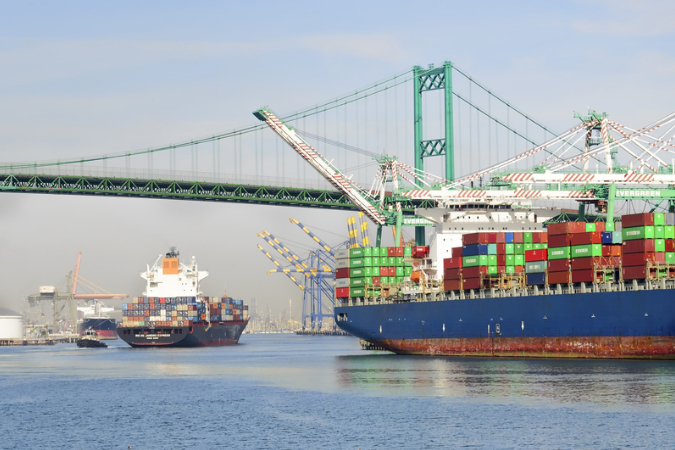
Container ships at the port of Los Angeles

Recent events in the ongoing dispute regarding automation and the use of robots at the Port of Los Angeles, the nation’s largest shipping terminal, continue to aggravate city officials, dockworkers, and shipping executives. The Los Angeles City Council unanimously vetoed a permit proposed by the LA Board of Harbor Commissioners that would allow the use of automated equipment.

The proposed automation plans for the Port of Los Angeles would authorize Maersk (the world’s biggest container shipping company) to implement numerous automated cargo carriers to transfer shipping containers between ships and trucks at their APM terminal. Although the city council is attempting to strike down these plans, its veto might not hold much power, as Maersk officials insist they are contractually permitted to use automated equipment without the need for a city permit or any port or state approval. The veto sends the discussion back to the LA Board of Harbor Commissioners, and in the meantime, officials at APM Terminals are continuing with plans to bring automation to the port—the first shipment of 45-foot-tall robotic machines is already en route from Poland and is expected to arrive later this month.

About the Automated Machinery

Maersk’s goal is to use automated machinery to cut labor costs and remain competitive with East and Gulf Coast ports. Automated carriers are able to operate 24 hours a day, whereas stevedore shifts can only cover 16 hours of labor each day (and each worker must be compensated for their time). Automated equipment also reduces costs by improving transportation times: The automated carriers would reduce the average daily turnaround time from 105 minutes to 35 minutes for over 4,000 trucks that enter the terminal.

Robots Replacing Jobs at the Port of Los Angeles

The opposition to the proposed automation is primarily due to the consequent decrease in jobs. Thousands of port employees and dockworkers have marched at the Port of Los Angeles to protest automation. Eleven thousand residents of the city also signed petitions in hopes of halting the plans. International Longshore and Warehouse Union 13, which represents thousands of dockworkers at the port, believes the proposed plans could result in a loss of 500 to 700 job assignments each day.

Without implementing automation, the costs of operations and turnaround time will continue to increase, creating a problem for both dockworkers and the shipping and logistics industry. If the Port of Los Angeles does not modernize its approach, manufacturers could be tempted to explore options at other ports with lower prices and expedited processes. Automation isn’t necessarily the only solution, though—a reduction in shipments to the port could drive logistics professionals to pursue other strategies for improving their margins, such as investing in more efficient equipment, creating a streamlined approach to cargo transportation, or hiring around-the-clock workers to keep up with demand.

Global Shipping’s Ocean Freight Transportation Services

We’re still waiting to see whether or not automation will become a mainstay at the Port of Los Angeles, but in the meantime, Global Shipping is here to facilitate maritime shipping efficiently. Our container loading and unloading service ensures that your containers and their contents are handled safely when their carrier vessels arrive at and depart from the port. Contact us today to learn more about how our ocean freight services can take the hassle out of shipping to the Port of Los Angeles.

The Expansion of the Port of Savannah and its Effect on the Cargo Industry

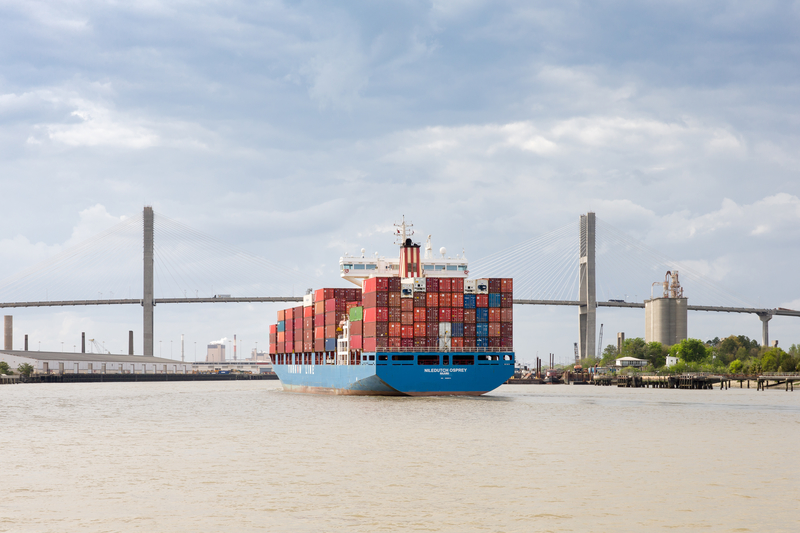
cargo container ship approaching Port of Savannah, Georgia

In recent American shipping industry news, St. Louis has been chosen for a new rail connection with the Port of Savannah, a major U.S. seaport. The Port of Savannah is investing $3 billion into a joint partnership with the St. Louis Regional Freightway to improve the movement of goods to the Midwest.

With the expansion of the Savannah harbor, containerized cargo capacity is predicted to increase from 5 million to 8 million TEUs (20-foot equivalent units) by 2028, while the cost of intermodal freight transportation will drastically decrease, reducing the cost of container shipments by $300 to $400 when shipped from Savannah instead of the West Coast.

This progress is also due to the construction of a new rail terminal in Savannah’s shipping harbor, the Mason Mega Rail Terminal, which is projected to double terminal rail life capacity to 1 million containers per year. The Georgia Port Authority is contributing $92 million to help fund the new rail terminal.

With new infrastructure in place, the harbor will allow retailers and manufacturers to easily distribute goods between the Midwest and the country’s perimeter, all while cutting costs.

Prime Real Estate for the Shipping Industry

Matt Freix, Regional Vice President for DNJ International Services, claims St. Louis has everything shipping and freight forwarding companies need for easy, cost-effective transportation. The city is positioned in the middle of the country near four interstate highways and remains the country’s third largest rail hub. By partnering with the Port of Savannah, St. Louis can also support a larger volume of containers and goods.

The Effect on the Cargo Industry

The Port of Savannah’s expansion plan and partnership with St. Louis will support both existing and new business in the St. Louis region, and the development of new infrastructure will enable rail providers to offer faster rail services to the Midwest, a hub for intermodal freight transportation. More freight forwarders and shippers may decide to transport goods through the East Coast port instead of Western ones to cut costs and improve their business’ bottom line.

Improved freight and shipping capabilities create the potential for stronger relationships between national and global supply chains. The Port of Savannah is increasing its imports and exports and will continue to do so with the new developments set in place by the Georgia Port Authority and St. Louis Regional Freightway.